
Accounting & Bookkeeping For Clearer Decisions

Who This Fits, And What It Solves
Accounting fits the moment the books have stopped being reliable — or have simply stopped being something you have time for. It is the right starting point when the foundation itself is the problem. We start by looking at the source records and reconciliations as they stand today — what is current, what has drifted, and where the gaps are. From there we separate any bounded catch-up work from the recurring bookkeeping, and agree who is responsible for closing the books each month so the close stops depending on whoever has a free afternoon.

Businesses With Late Or Unreliable Closes
You cannot tell whether last month was good until the books finally close, and by then the month is over. Late, unreconciled, or inconsistent books make every other decision guesswork.
Owners Who Have Stopped Doing The Books Themselves
The founder has been carrying the ledger, and it has become the thing that slips every busy week. Handing it to a steady hand returns those hours to the business and returns trust to the numbers.
Scope & Deliverables
Bookkeeping is the day-to-day discipline; accounting is the close and the structure on top of it. Most engagements include the full arc, tuned to the volume and complexity of the business.
The Monthly Close Checklist
- Record every transaction in the right period
- Reconcile bank, card, payroll, and loan accounts
- Close the books on an agreed date
- Hand clean numbers to reporting and tax
The four beats the rest of the month rests on.
Day-To-Day Bookkeeping
Transactions recorded in the right period and the right account, so the ledger reflects what actually happened rather than what was easiest to enter. Categorization stays consistent month to month.
Account Reconciliation
Bank, credit card, payroll, loan, and clearing accounts matched to external sources every month. Reconciliation is what turns an internally consistent ledger into a provably accurate one.
Monthly Close
A dependable close on a predictable date — not a scramble at quarter-end. The close produces the numbers the rest of the month's reporting and review are built from.
Clean-Up & Catch-Up
For books that have drifted, a bounded engagement to bring them current and reconcile the gaps before steady-state bookkeeping takes over. Sometimes the foundation needs repair before it can be maintained.
How The Work Runs
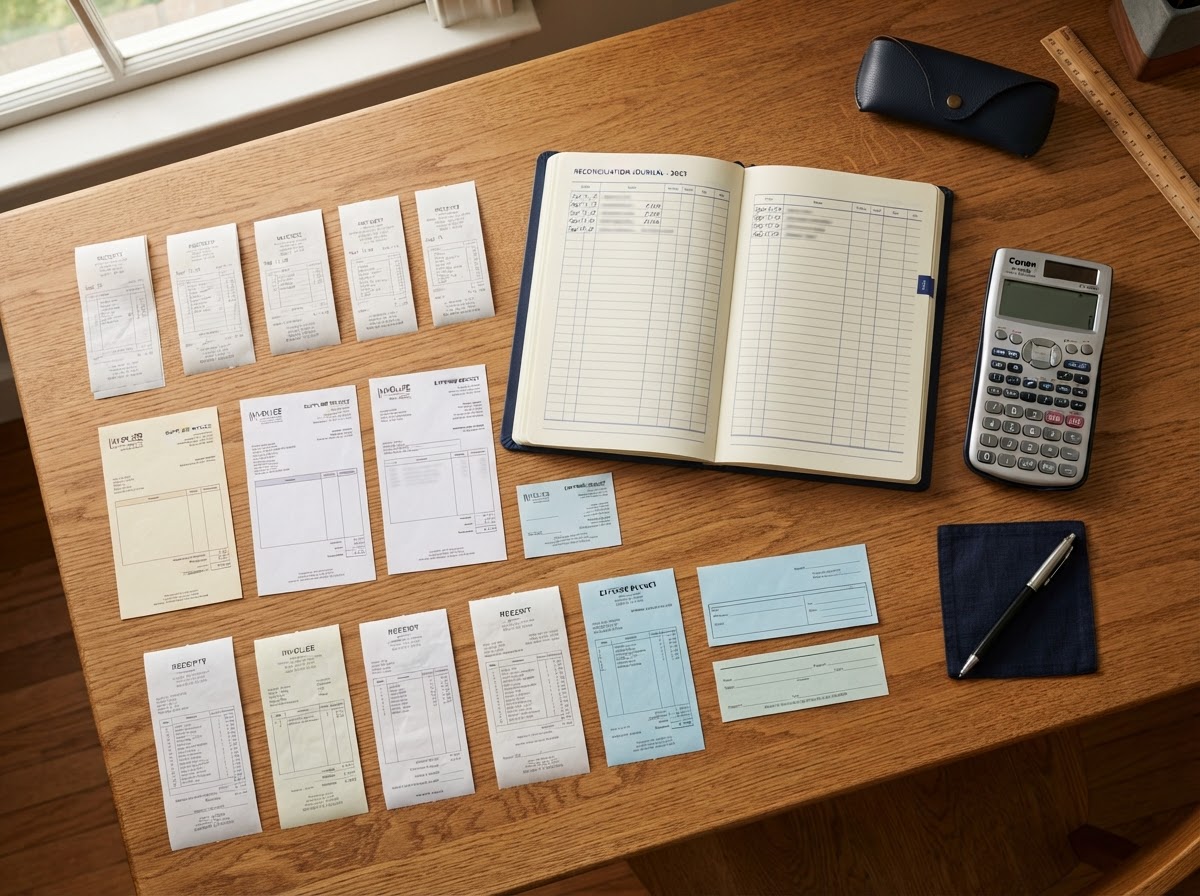
The accounting rhythm is the heartbeat every other service keeps time to. It runs on a monthly cycle with a few fixed beats and quiet, consistent work in between. Each cycle settles on an agreed close date, with source documents coming from the people closest to the transactions. Outstanding questions get resolved as they arise rather than batching into the close, and the month ends with reconciled balances and a short exception note handed to reporting and tax.
Set Up The Structure
We review the chart of accounts, the tools, and the workflows — and adjust them so the books capture the business the way it actually runs, not the way the template assumed.
Record Through The Month
Transactions are entered on a cadence that fits the volume, with a single place for them to land and a routine that keeps the inbox from becoming the bottleneck.
Reconcile And Close
Each month, every account is matched to its source and the books close on an agreed date. Variances are flagged and explained, not just balanced to zero.
Hand Off Clean Numbers
The closed books become the input to reporting, tax, and the planning work on top of them — handed off in a state the rest of the function can trust.
How It Plays Out In Practice
Illustrative Scenario
A Service Firm Whose Books Had Drifted
- Sort and reclassify prior transactions over a bounded catch-up period
- Reconcile every account back to external sources, gap by gap
- Tighten the chart of accounts to match how the firm actually earns
- Hand the steady-state close to a routine that holds month to month
Questions Before You Start
Before you start, it helps to be clear on three things: whether you need bookkeeping, accounting, or both; how your current tools and bank feeds are holding up; and whether any catch-up work is bounded or still open.
If it is easier to talk through, start a conversation and we will walk it with you.
Pair This With The Right Scope
Most owners combine two or three services into one scoped engagement. These are the natural companions to Accounting.
Begin A Scoped Engagement
Tell us where the business is today and where you want it to go. We'll propose a written scope you can hold us to — and adjust as the company grows.